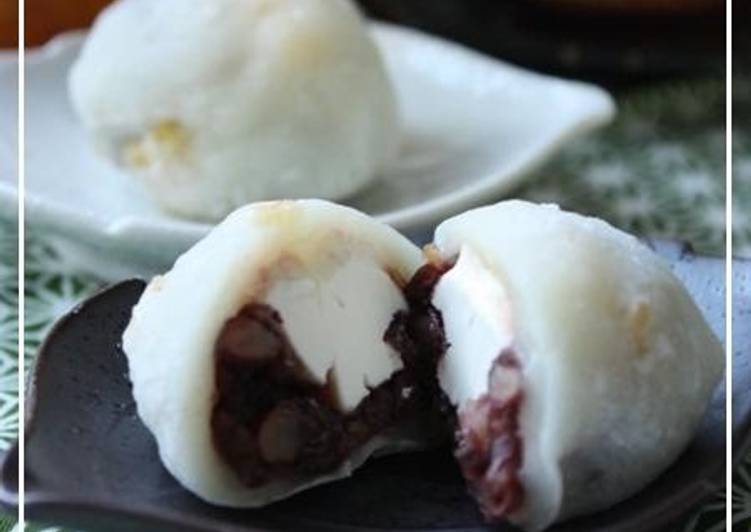
Hey everyone, I hope you are having an amazing day today. Today, we’re going to prepare a distinctive dish, yuzu daifuku. One of my favorites. This time, I will make it a little bit unique. This is gonna smell and look delicious.
A variation on traditional daifuku, the addition of candied yuzu rind to the gyūhiwrap adds a bright, citrusy tang that's hard to resist. The only challenge is actually finding yourself candied yuzu rind—the fragrant, orange-like fruit is nearly unknown in the English-speaking world. If you aren't using cream cheese, just roll the anko into balls. If the peel in your yuzu tea is a bit big simply snip it up with some kitchen scissors and it'll blend in with the gyuhi.
Yuzu Daifuku is one of the most popular of recent trending foods in the world. It’s enjoyed by millions every day. It’s simple, it is fast, it tastes yummy. Yuzu Daifuku is something that I’ve loved my entire life. They’re fine and they look fantastic.
To begin with this recipe, we have to first prepare a few components. You can have yuzu daifuku using 9 ingredients and 9 steps. Here is how you cook that.
The ingredients needed to make Yuzu Daifuku:
- Take Gyuuhi (sweet rice cake)
- Prepare 50 grams Shiratamako
- Make ready 30 grams Yuzu jam (or yuzu tea)
- Prepare 15 grams Sugar
- Take 60 ml Water
- Make ready Filling
- Prepare 120 grams Tsubu-an (or your preferred an)
- Get 50 grams Cream cheese (optional)
- Prepare 1 Flour or katakuriko
Most yuzu daifukus use candied yuzu mixed into anko. Coffee Daifuku - A sweet coffee cream fill this non-traditional, but extremely popular, daifuku. Yuzu are pungently bitter Japanese citrus fruits prized for their grapefruit-like taste. Warabimochi are a typical Japanese sweet made from Bracken (Warabi) starch with a awesome texture and flavour.
Steps to make Yuzu Daifuku:
- This time I used Okatsugi's yuzu tea recipe. Please refer to. You can use homemade or store-bought items for this recipe.
- Prepare the filling. Ths time I'm using tsubu-an and cream cheese. I split the anko and cream cheese into 6 and wrapped the anko around each piece of cream cheese.
- If you aren't using cream cheese, just roll the anko into balls.
- If the peel in your yuzu tea is a bit big simply snip it up with some kitchen scissors and it'll blend in with the gyuhi.
- Make the gyuuhi. Add the gyuhi ingredients to a heat-resistant bowl. Mix together well to dissolve. Lightly cover the bowl with cling film and heat the mixture in a microwave for 1 minute 30 seconds. (Refer to the hints section here.)
- Take the mixture out and mix well with a rubber spatula. Once sticky and glossy move onto the next step. If it's still a little watery, microwave for a further 30 seconds.
- Place the gyuhi dough onto a vat or similar dusted with katakuriko. Divide into six portion. Once the gyuhi has cooled just enough so that you can work with it, move onto the next step.
- Stretch the gyuhi dough out until larger than the balls of anko. Keep the centre still quite thick and stretch whilst dusting with katakuriko, then wrap the dough around the anko. Pinch the seam securely shut.
- They're done! They will stay soft for 2 days when kept in the fridge. Wrap them up so they don't dry out.
Yuzu are pungently bitter Japanese citrus fruits prized for their grapefruit-like taste. Warabimochi are a typical Japanese sweet made from Bracken (Warabi) starch with a awesome texture and flavour. This slightly sour edition was flavoured with Yuzu, a delicious Japanese citrus fruit. All Warabimochi are single wrapped so that the don't get dry or hard. They taste similar to grapefruit with a hint of mikan.
So that is going to wrap this up with this special food yuzu daifuku recipe. Thank you very much for reading. I’m sure that you will make this at home. There’s gonna be more interesting food in home recipes coming up. Don’t forget to bookmark this page on your browser, and share it to your family, friends and colleague. Thanks again for reading. Go on get cooking!